
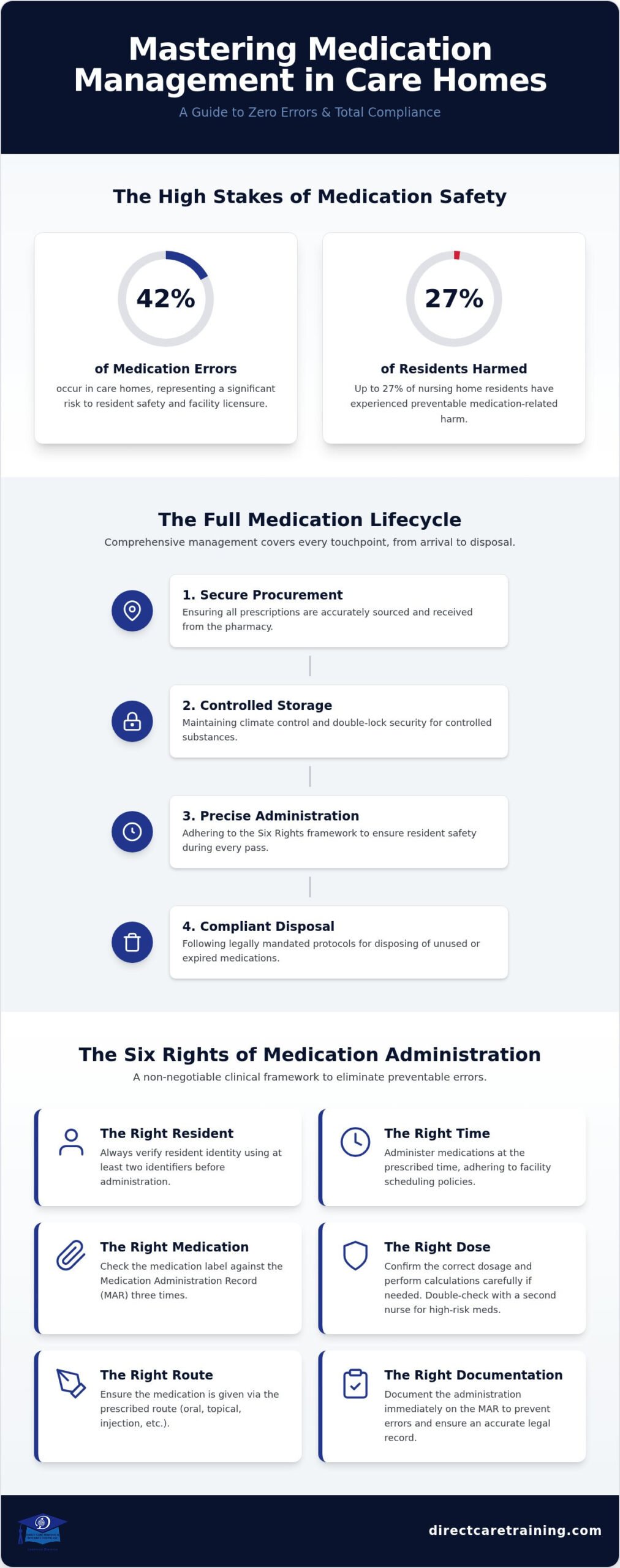
Did you know that care homes account for a staggering 42% of all medication errors? With research showing that up to 27% of nursing home residents have experienced medication-related harm, the stakes for your facility couldn’t be higher. You likely feel the constant pressure of maintaining a perfect record while managing high staff turnover and the persistent threat of regulatory citations. It’s a valid concern because a single documentation oversight or dose omission can jeopardize your license. Comprehensive resident medication management training isn’t just a regulatory checkbox; it’s your primary defense against clinical risk and administrative failure.
You deserve the peace of mind that comes with a team that’s 100% compliant and fully confident in their daily responsibilities. This 2026 guide is designed to help you master the core principles of medication safety to protect your residents, your staff, and your facility’s future. We’ll break down the "seven rights" of administration, examine the newest state-level training requirements, and provide a clear roadmap for achieving zero medication errors through structured, expert-led protocols. It’s time to move beyond the anxiety of inspections and build a culture of operational excellence.
Key Takeaways
- Understand the full operational scope of medication handling, from secure procurement and storage to safe disposal protocols.
- Implement the “Six Rights” of medication administration as a non-negotiable clinical framework to eliminate preventable errors.
- Identify the root causes of common facility errors and learn how to safeguard your Medication Administration Record (MAR) against transcription risks.
- Discover how to select a resident medication management training partner that prioritizes regulatory accreditation and practical, on-site competency.
- Master legal documentation best practices to ensure your facility remains 100% compliant during high-stakes state inspections.
What is Resident Medication Management Training?
Are you viewing medication tasks as a single event or a continuous cycle of clinical responsibility? **Resident medication management training ** is a comprehensive curriculum designed to govern every touchpoint a medication has within your facility. It isn’t merely the act of handing a pill to a resident; it encompasses the secure procurement of prescriptions, climate-controlled storage, precise administration, and the legally mandated disposal of unused substances. In the high-stakes environment of long-term care, this training serves as the primary barrier between operational excellence and a catastrophic regulatory failure.
How do your staff members distinguish between medication administration and assistance with self-administration? This distinction is a frequent point of confusion that often leads to licensing citations. Administration involves the total management of the process by a trained professional, whereas assistance is a supportive role for residents who retain some level of independence. Universal training standards ensure that every staff member understands these legal boundaries, preventing unlicensed personnel from performing tasks that fall outside their scope of practice. Without this clarity, your facility is exposed to significant legal risk.
Direct care workers function as the frontline of this process. They don’t just deliver doses; they monitor for side effects, verify pharmacy accuracy, and maintain the integrity of the clinical record. They are the final safeguard in a complex system. When a worker is properly trained, they can identify a pharmacy transcription error or a resident’s adverse reaction before it escalates into a medical emergency. Standardizing this knowledge across your entire team is the only way to ensure consistent outcomes.
For facilities seeking to enhance their clinical outcomes, you can discover HealthWorksPros for expert primary and psychiatric medical services that complement your staff’s training.
In addition to clinical oversight, facilities can support residents by directing them to resources for health coverage; Medicare Mentors can help families navigate the complexities of retirement health planning and Medicare.
The Core Objectives of Training
The primary goal of any robust training program is the absolute prevention of Adverse Drug Events (ADEs). Beyond resident safety, this training ensures your facility remains in total alignment with state and federal oversight bodies. By implementing standardized, documented protocols, you significantly reduce your facility’s liability. When every action is backed by professional instruction, you create a defensible record of care that protects your license during intensive audits; for additional clinical support, check out PharmEDU for comprehensive pharmacology reviews. It’s about moving from a reactive "hope for the best" strategy to a proactive culture of safety.
Who Requires This Training?
Training is not reserved for clinical staff alone. Direct care workers in Adult Foster Care (AFC) and assisted living environments must complete these courses to legally assist residents with their daily regimens. Additionally, nursing home administrators need this knowledge to effectively oversee their clinical teams and verify that internal audits meet national benchmarks. Providing consistent **resident medication management training ** ensures that even non-medically licensed staff members who provide simple reminders or help with opening containers understand safety protocols to prevent accidental harm.
Essential Components of a Compliant Training Program
What separates a mediocre training session from a legally defensible program? The answer lies in the rigor of its core components. A high-quality **resident medication management training ** curriculum must provide more than just a list of instructions. It needs to instill a clinical mindset that prioritizes precision at every stage. If your current program treats the medication pass as a routine chore rather than a high-risk clinical event, your facility remains vulnerable to avoidable errors.
Beyond the administration itself, staff must master the logistics of storage and security. Controlled substances require double-locking mechanisms and strict perpetual inventory counts to prevent diversion and maintain federal compliance. Similarly, medications requiring refrigeration must be kept within specific temperature ranges to maintain their chemical integrity. Training should also emphasize infection control, ensuring that hand hygiene and "no-touch" techniques are practiced consistently to prevent cross-contamination during the busy medication pass. These practical skills are the difference between a safe environment and a facility citation.
The Six Rights of Medication Administration
The foundation of safety starts with a disciplined approach to the Six Rights. Staff must verify the Right Resident, the Right Medication, and the Right Dose before any action is taken. They must also confirm the Right Route, ensure it’s the Right Time, and complete the Right Documentation immediately following the pass. The Six Rights represent the industry gold standard for clinical risk mitigation. Adhering to this framework ensures that staff don’t rely on memory or habit, which is where most clinical errors occur.
Understanding Side Effects and Adverse Reactions
Staff don’t need to be pharmacists, but they must understand pharmacology basics to protect your residents. This involves recognizing common drug classes and the specific side effects they produce in the elderly population, such as increased fall risks, dehydration, or sudden confusion. When an adverse reaction occurs, your team needs a clear emergency protocol. This includes immediate resident stabilization, followed by precise communication with prescribing physicians and pharmacists to adjust the care plan. Selecting a comprehensive adult foster care direct care worker training program ensures your staff is prepared for these high-pressure scenarios before they escalate into emergencies.
Common Medication Errors and How Training Prevents Them
Why do medication errors persist despite established protocols? Most incidents in long-term care aren’t the result of intentional negligence but rather systemic failures in communication and oversight. National data indicates that dose omission accounts for 32% of all errors, followed by overdoses at 14% and underdoses at 7%. These aren’t just numbers; they represent residents missing life-sustaining therapy or receiving toxic levels of medication. Effective **resident medication management training ** transforms these statistics from abstract risks into actionable safety checkpoints for your staff.
Transcription errors in the Medication Administration Record (MAR) remain a top-tier threat to resident safety. When a staff member incorrectly copies a physician’s order or a pharmacy label onto the facility’s record, the error is "baked in" to every subsequent dose. Training must focus on rigorous double-verification processes during the intake of new prescriptions. Beyond the paperwork, your facility culture should embrace "near-miss" reporting. By analyzing errors that almost happened, you can identify flaws in your workflow without waiting for a resident to be harmed. This proactive approach turns a potential tragedy into a training tool.
The psychological toll of a medication error on your staff is often underestimated. When a direct care worker realizes they have caused harm, the resulting anxiety and guilt can lead to high turnover or a "culture of silence" where future mistakes are hidden. A seasoned consultant knows that a well-trained team is a confident team. By providing the tools necessary for mastery, you protect your staff’s mental health and maintain a stable, high-performing workforce. This stability is the foundation of a safe, compliant home.
High-Risk Medications and Special Precautions
Certain drug classes carry a disproportionate risk of causing serious harm. Your **resident medication management training ** must place extra emphasis on high-alert medications like insulin, anticoagulants, and psychotropic medications. These require precise monitoring of blood glucose levels or international normalized ratio (INR) values. Staff must also understand the dangers of crushing medications; altering extended-release or enteric-coated tablets can lead to rapid, dangerous absorption. PRN protocols also require strict documentation, ensuring that the "reason for use" and the "effectiveness" of the medication are clearly recorded every time.
The Cost of Non-Compliance
What is the financial reality of a regulatory citation? Beyond the immediate fines, a history of medication errors can lead to the revocation of your facility license and a permanent stain on your professional reputation. You also face skyrocketing insurance premiums and the constant threat of civil litigation. Maintaining clinical readiness is a multi-faceted endeavor. While medication safety is paramount, ensuring your team holds a current CPR Certification for Healthcare Providers is a complementary safety requirement that provides an additional layer of protection during medical emergencies. Investing in comprehensive training is always more cost-effective than the legal fallout of a single preventable error.
Documentation and the Medication Administration Record (MAR)
How often do your staff members view the Medication Administration Record (MAR) as a mere administrative burden? In the eyes of a state surveyor, the MAR is the final word on resident care. If a dose isn’t recorded, it was never administered. This "if it wasn’t documented, it wasn’t done" standard is the cornerstone of clinical accountability. Effective **resident medication management training ** must move beyond the "how-to" of administration and instill a deep respect for the legal weight of the clinical record. Without precise documentation, your facility has no defense against claims of negligence or regulatory non-compliance.
Accuracy begins with rigorous standards for initialing, signing, and correcting entries. Staff must be trained to never sign for a medication before the resident has actually swallowed it. When errors occur in the record, they shouldn’t be obscured with white-out or scribbles; instead, a single line through the error with an "EK" (error in keying) note maintains the integrity of the document. Whether your facility utilizes traditional paper binders or modern electronic MARs (eMAR), the training focus remains the same. While eMARs reduce legibility issues, they require specific training on password security and real-time data entry to remain effective.
Managing medication refusals is another area where documentation often fails. A resident has the right to refuse, but your staff has the obligation to document the refusal, the reason given, and the subsequent notification of the supervisor or physician. This trail of communication is vital, similar to how PractCom helps dental practices manage digital informed consent and post-treatment instructions to ensure total clarity. It proves that your facility respected resident rights while simultaneously monitoring their clinical stability. Don’t let a blank space on a MAR become the reason for a high-level citation during your next inspection.
The Anatomy of a Perfect MAR Entry
A compliant MAR entry must contain four non-negotiable elements: the date, the precise time of administration, the exact dosage, and the legible signature or initials of the staff member. When dealing with PRN (as needed) medications, the record must also include the specific symptom that necessitated the dose and a follow-up note regarding its effectiveness. Accurate MAR documentation is the primary defense during an audit. It provides a clear, chronological story of the care provided and the resident’s response to treatment.
Medication Reconciliation and Audits
Management must take an active role in verifying the work of direct care staff through monthly medication audits. This process is especially critical during high-risk transitions, such as reconciling new orders following a hospital discharge. Inconsistencies between the discharge summary and the facility MAR are frequent sources of medication errors. Integrating these internal reviews into your broader medical claims audit services strategy ensures that your clinical records are consistent, accurate, and ready for external scrutiny. To ensure your facility is fully prepared for its next regulatory review, consider scheduling a professional medical claims audit to identify and correct documentation gaps before they result in a citation.
Selecting a Professional Training Partner
How do you distinguish between a mere training vendor and a true compliance partner? When the safety of your residents and the validity of your facility license are on the line, selecting the right provider for your **resident medication management training ** is one of the most critical decisions you’ll make. A partner shouldn’t just offer a library of generic videos; they should provide a robust, accredited curriculum that reflects the latest 2026 safety standards. You need a team that understands the nuances of pharmacology, the legalities of documentation, and the practical realities of a busy medication pass.
While online platforms offer convenience, they often lack the depth required for complex clinical tasks. A professional partner should offer customization that aligns with your specific resident population. Whether you’re managing a specialized memory care unit or an adult foster care home, the training must address the unique challenges your staff faces daily. This includes ensuring your provider remains a resource long after the initial session, offering updates on evolving regulations and ongoing consultative support. If your training provider isn’t keeping you ahead of the regulatory curve, they aren’t protecting your business.
Providers that prioritize high-quality care often lead by example; for instance, you can discover Elleson Care to learn more about their commitment to person-centred NDIS and aged care services in Western Australia.
Why On-Site Training Matters
Nothing replaces the value of hands-on, practical demonstrations. On-site **resident medication management training ** allows staff to practice with real equipment, from opening blister packs to correctly measuring liquid doses, under the watchful eye of a seasoned expert. This environment fosters real-time Q&A, allowing your team to resolve specific facility-related concerns immediately. Beyond the technical skills, shared learning experiences build team cohesion and a collective commitment to safety that a computer screen simply can’t replicate.
The Direct Care Training Advantage
Our approach is built on decades of experience in both the clinical and business aspects of long-term care. We don’t just teach the rules; we provide expert-led courses designed to solve real-world facility challenges. Our team maintains a deep understanding of Michigan adult foster care licensing requirements alongside national LTC standards. This expertise ensures your staff is prepared for any audit. We provide more than just classroom instruction, offering specialized training manuals and consulting services that serve as a permanent safeguard for your operation. It’s time to partner with mentors who are as committed to your facility’s success as you are.
Securing Your Facility’s Clinical Future
Are you prepared for your next unannounced survey? Mastering **resident medication management training ** is about more than just avoiding fines; it’s about establishing a standard of care that protects every resident under your roof. We’ve explored how the "Six Rights" serve as a non-negotiable safety net and why the Medication Administration Record remains your most powerful legal defense. By focusing on rigorous error prevention and precise documentation, you create a culture where staff feel confident and residents remain safe. It’s time to move from reactive risk management to proactive clinical excellence.
Don’t settle for generic compliance. You need a partner who understands the high-stakes nature of long-term care. Direct Care Training offers on-site training options for maximum impact, alongside expert compliance consulting and comprehensive training manuals for specialized care. These resources ensure your facility doesn’t just meet standards but sets them for the entire industry. Ensure your staff is ready; sign up for Medication Management Training with Direct Care Training today. Your commitment to professional standards is the best protection for your residents and your license.
Frequently Asked Questions
Is resident medication management training required by law?
Yes, state regulations mandate this training for any unlicensed staff member handling medications in residential settings. While federal CMS guidelines require facilities to maintain error rates below 5%, specific curriculum and hourly requirements are determined at the state level. Failure to provide verified training results in immediate regulatory citations and puts your facility license at significant risk.
How often do staff members need to be retrained on medication handling?
Most states require annual refresher training to maintain competency and address evolving regulatory standards. However, you should implement immediate retraining if a staff member is involved in a medication error or a documented near-miss incident. Consistent **resident medication management training ** ensures that safety protocols remain top-of-mind for your entire direct care team throughout the year.
Can non-licensed staff administer injections after this training?
Generally, non-licensed staff cannot administer injections unless state law specifically allows for task delegation by a licensed nurse. In many jurisdictions, unlicensed personnel are restricted to oral, topical, and certain inhaled medications. You must verify your specific state’s Nurse Practice Act to ensure your staff isn’t performing clinical tasks that exceed their legal scope of practice.
What is the difference between medication administration and assistance?
Administration involves a staff member taking full responsibility for the "Six Rights," including the preparation and delivery of the dose. Assistance is limited to helping a resident who is cognitively and physically capable of self-administering, such as opening a bottle or providing a verbal reminder. Confusing these two distinct roles is a frequent source of high-level licensing citations during inspections.
What happens if a staff member makes a medication error after being trained?
Your first priority is resident safety, which requires an immediate clinical assessment and physician notification. Following the medical response, you must document the error in an incident report and conduct a thorough root-cause analysis. This process usually leads to mandatory remedial training and a review of facility-wide protocols to prevent a systemic recurrence of the mistake.
Does the training cover the disposal of expired or discontinued medications?
Yes, comprehensive **resident medication management training ** includes strict protocols for the secure destruction and disposal of medications. Expired or discontinued drugs must be removed from the active storage area immediately to prevent accidental administration. Disposal typically requires a witness and specific documentation in a destruction log to meet both environmental and pharmacy board standards.
How do we document a resident refusing their medication?
You must record the refusal on the Medication Administration Record (MAR) using your facility’s specific code, such as circling your initials. In addition to the MAR entry, a narrative note should describe the reason for the refusal and the staff member’s attempt to explain the medication’s importance. Timely notification of the supervisor or prescribing physician is a mandatory follow-up step for clinical safety.
Can we use online training for initial medication certification?
While online courses provide a foundational knowledge base, many states require a hands-on clinical skills competency check for initial certification. A blended approach is often the most effective way to ensure staff can physically handle medications safely in a real-world environment. Relying solely on digital modules without a practical demonstration often leaves dangerous gaps in a staff member’s clinical readiness.